
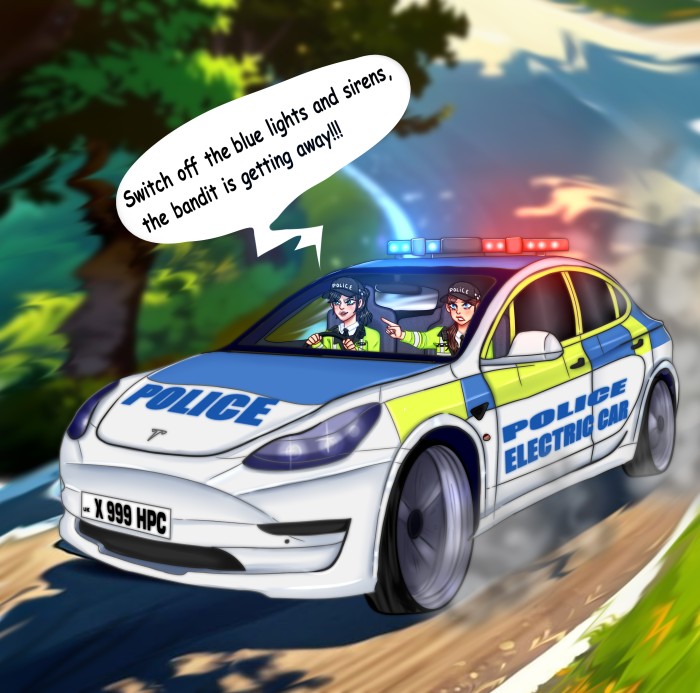
Thinking Electric Vehicle?
Electrically driven vehicles are seen as the biggest technological change since the invention of the internal combustion engine. The motive for their introduction is to combat climate change globally. The EV concept is not new; the first electric car were built in the UK was in 1895.
Despite their rising popularity, electric vehicles (EVs) remain in the early stages of development.
- Limited Battery Range. The distance you can travel is not good, compared with petrol or diesel vehicles
- Battery Lifespan. As batteries get older, they progressively degrade
- Lower top speeds. To preserve battery consumption
- Electricity used. Fossil fuels may still be used to generate
- Down time. Shift time lost while re-charging
- Charging Infrastructure. Unreliable, inadequate and often poorly maintained. Worse in cold weather
- Long Charging Times. Empty to full can take several hours
- More Expensive to Buy. The main reason being the cost of the battery
- More Expensive to Insure. The cost of repairs is greater
- Environmental Impact. Mining the minerals that go into batteries – lithium, nickel, and cobalt has a big climate impact upfront.
These aspects should be balanced with the prospect that over the vehicle’s life span:
- minimal greenhouse gases and air pollutants will be emitted, contributing to local environmental improvements
- EVs are a potential way to cut daily vehicle fuel costs
Market pressures have influenced some major motor manufacturers to scale back or delay their electric vehicle plans. This is likely to impact on government plans to halt the sale of new petrol and diesel cars, including liquid petroleum gas (LPG) and hybrid vehicles, proposed for 2035.
Driving Technique
Because electric vehicles are “automatic”, they are easier to drive. You have two pedals only, accelerator and footbrake. They are safer to drive because you can focus more on the road and traffic ahead.
Most EVs use a standard auxiliary battery as well as the large storage batteries. If the vehicle is unused for a period this battery can become flat, despite there being charge in the main batteries. It will need re-charging separately.
EVs have a regenerative braking feature. With some manufacturers, the system is virtually imperceptible to the driver, with others it takes a more active and obvious role. Brake regeneration helps to charge the larger batteries that directly drive the car. When you lift your foot off the accelerator pedal, the system starts to put energy back into the battery. You can feel the car start to slow down. The sensation will feel different, depending on the car manufacturer. Some tailor the way it feels to your own preference. To fully harvest wasted energy, it may be possible to choose the maximum setting, or if you dislike the sensation of the car braking itself, you can turn it off.
One pedal driving is where you can use the accelerator pedal to completely control the car’s speed. Taking your foot off the gas pedal completely can feel like you’ve got your foot firmly on the brake. Drivers need to modulate the right foot to speed up and slow down, rather than swapping
between the brake and accelerator pedals. You can expect the brake lights to come on if the car is slowing quickly, even if you’re not even touching the brake pedal.
Key Considerations for Choosing an EV
Buying, or leasing a fully electric car (EV) might work if you drive mostly short-to-medium distances. If you can charge at home, drive to and from work, and do the weekly shop, an EV is not a bad choice. For the lowest running costs, you need access to cheap overnight home charging. Public charging can be very expensive, especially fast charging.
A plug-in hybrid is a good first stepping stone in the EV experience. It has a petrol or diesel engine as its primary means of propulsion. A larger battery gives somewhere between 25 to 70 miles of electric range depending on the manufacturer and model. You will be able to drive short journeys on electric power but use the internal combustion engine for long journeys.
A self-charging or full hybrid combines a petrol or diesel engine with an electric motor and a small battery. The is no plug. The battery is charged automatically while driving through a process called regenerative braking (capturing energy during deceleration) and by the internal combustion engine acting as a generator. The car uses the electric motor, petrol engine, or both as needed for optimal fuel efficiency. There is no range anxiety because they do not rely on an external charging station, they function exactly like a traditional car, requiring only trips to the fuel station.